Unpackaging Sustainability in Scotch Whisky

Sustainability has become one of Scotch whisky's favourite talking points. Renewable energy, recycled glass, peatland restoration and net-zero targets are now almost as familiar as conversations about casks and age statements. There is plenty of genuine progress behind the claims, but separating meaningful environmental change from clever positioning isn't always straightforward.

In January 2021, the Scotch Whisky Association announced one of the industry's more ambitious commitments: Scotch whisky would reach net-zero emissions in its operations by 2040, five years ahead of the Scottish Government's own target.
There was good reason for optimism. Greenhouse gas emissions had already fallen by 34% since 2009, just 1% of industry waste was going to landfill and 28% of primary energy was coming from non-fossil fuel sources. Whatever your view of corporate sustainability pledges, those aren't insignificant numbers.
Fast forward to 2026 and sustainability has moved from something happening largely behind distillery walls to something increasingly visible on websites, packaging and social media. New distilleries proudly discuss renewable energy and B Corp certification. Established producers talk about biomass boilers, anaerobic digesters and peatland restoration. Bottles are getting lighter, packaging is being reconsidered and seemingly everyone has a photograph of somebody standing in a field looking thoughtfully at barley.
None of this is a bad thing.
The difficulty comes when sustainability stops being simply an operational challenge and becomes part of the sales pitch. Once environmental responsibility becomes something capable of differentiating one bottle from another, we're inevitably left asking whether the greenest-looking whisky is actually the greenest whisky.
The answer, inconveniently, isn't particularly simple.
The Loudest Voice in the Room
Nc'nean is probably one of the clearest examples of sustainability becoming part of a distillery's identity rather than simply another corporate target.
Its distinctive bottles use 100% recycled glass, renewable energy has been central to the operation from the beginning and organic Scottish barley forms part of the production story. In 2020, Nc'nean also became Scotland's first whisky distillery to achieve B Corp certification.
It makes sense that the distillery talks about it. Nc'nean entered a mature and crowded Scotch whisky market without generations of heritage to fall back on. Sustainability provided both a genuine operating philosophy and a clear point of difference.
Bruichladdich has taken a similarly public approach, albeit from the different position of an established Islay distillery reinvented under modern ownership. Its B Corp certification sits alongside impact reporting, discussions around local barley, provenance and supply-chain transparency.

In both cases, sustainability is part of the conversation with the drinker, and that deserves credit. Consumers can't make informed decisions if producers don't tell them what they're doing.
But visibility and impact aren't necessarily the same thing.
Some of the biggest environmental projects in Scotch whisky have been undertaken by companies that don't necessarily put sustainability anywhere near the front of the bottle.
The Quiet Achievers
Glenmorangie is a useful example.
Ask most whisky drinkers what they associate with Glenmorangie and environmental engineering probably won't be the first answer. Yet since 2017, its Highland distillery has operated an anaerobic digestion facility designed to remove around 95% of pollutants from wastewater before it reaches the Dornoch Firth. Alongside that sits its work to restore native oyster reefs, bringing back an ecosystem absent from the area for generations while providing natural filtration.
The Macallan presents another version of the same story.
When its new distillery opened in 2018, renewable energy was built into a major piece of long-term infrastructure rather than added later because sustainability had suddenly become fashionable. Biomass and renewable electricity now provide the overwhelming majority of the site's energy requirements, while a 4MW solar farm added in 2024 was designed to meet a significant proportion of annual electricity demand.
Move up another level in scale and you reach Diageo. Its regenerative agriculture programme moves attention beyond the distillery and into the fields supplying barley and wheat. Soil health, biodiversity, water stewardship and carbon sequestration aren't particularly easy subjects to squeeze onto a whisky label, but they're important precisely because so much of Scotch whisky's environmental impact happens before ingredients reach the distillery.
None of this makes larger producers environmentally superior to smaller sustainability-led distilleries. Their overall footprints are inevitably much larger.
It simply demonstrates that environmental progress and environmental marketing aren't always moving at the same volume.
The Certification Question
B Corp has understandably become one of the most recognisable signals of environmental and social responsibility. Governance, workers, communities, environmental performance and transparency all form part of the assessment, and achieving certification requires genuine work.
But certification also demonstrates how difficult comparisons become.
A small distillery producing modest volumes using renewable energy and organic barley operates in a completely different world from a producer making millions of litres across multiple sites. Both can make substantial environmental improvements, but measuring which is "more sustainable" quickly becomes an exercise in comparing things that aren't particularly comparable.
This isn't an argument against B Corp. The transparency and scrutiny involved are valuable. It's an argument against treating certification as the end of the conversation.
The same applies to individual environmental claims. "100% renewable energy" sounds definitive, and within the boundary being measured it may well be. But it tells us very little about how bottles are manufactured, how ingredients arrive at the distillery or how finished whisky reaches consumers around the world.
Most of the really difficult parts sit outside the distillery gates.
The Problem with Scope 3

This is where Scope 3 emissions enter the conversation and everything gets considerably less tidy.
A distillery can control the energy used to run its stills. It can invest in efficient equipment, change how wastewater is treated and decide what happens to its own waste.
The wider supply chain is another matter.
Barley needs growing. Glass needs manufacturing. Corks, labels, cartons and presentation boxes need producing. Raw materials need transporting to the distillery and finished bottles need travelling to markets thousands of miles away.
Tourism adds another layer. A distillery can operate on renewable electricity while thousands of visitors arrive each year by car, coach, plane or, in the case of Islay, ferry.
None of that invalidates what happens at the distillery itself. It simply shows why environmental claims need context.
The SWA recognises this through its broader "grain to glass" approach, but Scope 3 remains where ambition becomes harder to turn into neat numbers. Producers can influence suppliers, encourage different farming practices and rethink packaging, but they can't simply flick a switch and decarbonise an international supply chain.
This is probably where the industry's sustainability credentials will ultimately face their biggest test.
Peat, Packaging and Uncomfortable Details
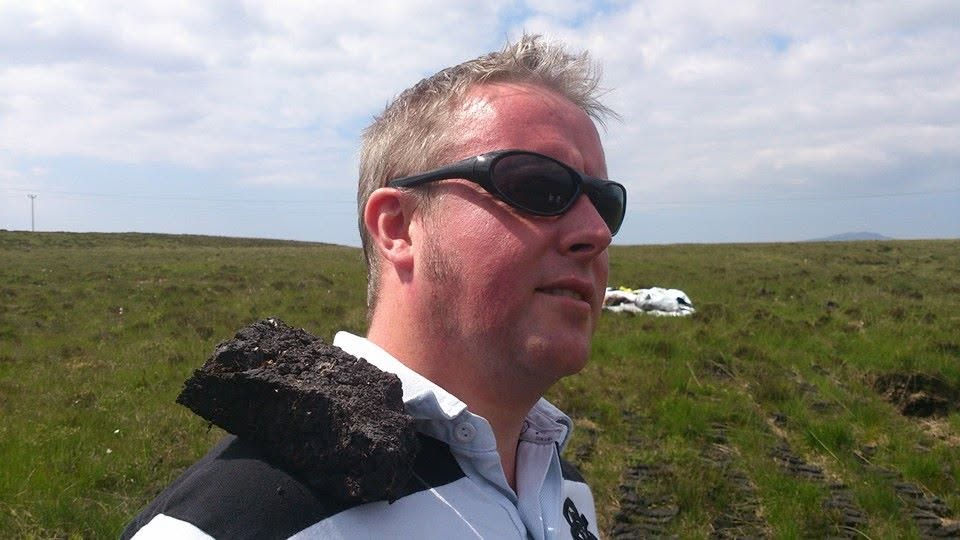
Peat presents another example of how quickly a simple sustainability story becomes complicated.
The industry has committed to playing an active role in the wider conservation and restoration of Scotland's peatlands by 2035. That's important, particularly given the role healthy peatlands play in carbon storage and biodiversity.
But whisky's relationship with peat is only one part of a much larger environmental picture involving land ownership, historic drainage, agriculture, forestry and habitat management. Restoration can't be reduced to a simple equation in which whisky removes peat from one place and puts it back somewhere else.
Packaging is arguably less romantic, but easier to understand.
Whisky has spent years associating weight with quality. Premium bottles became heavier, presentation boxes became more elaborate and some luxury releases arrived packaged as though the bottle needed protecting from artillery fire.
That creates an awkward collision between luxury positioning and environmental responsibility.
Glass is energy-intensive to manufacture and heavy to transport. Secondary packaging creates another layer of material, even when technically recyclable. A lighter bottle in a simple cardboard carton may not look as impressive on the shelf, but environmentally it can make considerably more sense.
The challenge is persuading consumers that less packaging doesn't mean less whisky. Perhaps some of sustainability's biggest changes will depend not only on distilleries changing their behaviour, but on drinkers changing ours.
Marketing Versus Reality
This is where accusations of greenwashing need a little restraint.
There undoubtedly are companies making selective environmental claims because they're commercially useful. Whisky is hardly unique in that regard.
But there's a danger in becoming so suspicious of sustainability marketing that every company talking about environmental improvements is dismissed as cynical.
If Nc'nean has built a distillery around renewable energy, recycled glass and organic barley, why shouldn't it talk about it? Equally, the absence of a green-heavy marketing campaign doesn't mean nothing is happening behind the scenes.
A multinational producer improving efficiency across millions of litres can potentially deliver an absolute environmental reduction far greater than the entire footprint of a small distillery. That producer may still have the larger overall footprint, but both statements can be true.
That's the problem with trying to award somebody the title of whisky's greenest distillery.
Scale matters. Efficiency matters. Absolute emissions matter. Supply chains matter. And so does transparency.
The distillery with the simplest environmental story isn't necessarily the one with the smallest impact.
What Actually Matters?
Perhaps the better question isn't which distillery is most sustainable, but which producers are demonstrating meaningful and measurable progress.
"Sustainable" on its own doesn't mean much. Neither does an ambitious target twenty years into the future without evidence of what's happening between now and then.
More useful are specific figures, published methodologies, interim targets and reports showing whether those targets have actually been met.
Even more revealing is whether a company talks about the difficult bits.
Genuine environmental improvement involves compromises, failed experiments and problems that haven't yet been solved. A sustainability report containing nothing but success stories should probably invite more questions than one prepared to admit where progress has been slow.
Certification can provide useful external scrutiny, but it shouldn't replace scrutiny from consumers, journalists or the industry itself. Transparency ultimately matters more than the badge.
The Greenwashing Test
There isn't a single test capable of separating genuine environmental progress from greenwashing, but the questions are relatively straightforward.
When a distillery says it has reduced emissions, does it explain what's been measured and against what baseline? Does the figure cover direct operations or extend into the supply chain? When renewable energy is mentioned, what exactly is being powered by it? When packaging is described as recyclable, has the amount of packaging actually been reduced?
Perhaps most importantly, can you see sustainability influencing actual investment decisions?
A biomass boiler, anaerobic digester, solar farm or redesigned bottle requires money to be spent and operational decisions to change. Those are considerably harder to fake than a sustainability campaign.
Follow the investment and you often get a much clearer idea of how seriously a company takes the subject.
The Verdict
The Scotch whisky industry is making genuine environmental progress.
The SWA's 2040 commitment represents real ambition, and across the industry there are examples of meaningful work in renewable energy, wastewater treatment, agriculture, packaging, biodiversity and peatland restoration.
At the same time, sustainability has unquestionably become part of whisky marketing. Those two things don't cancel each other out.
A company can make genuine environmental improvements and recognise that consumers might respond positively to them. If environmental responsibility becomes commercially valuable, that may actually encourage more companies to invest in it.
The danger comes when the appearance of progress becomes more valuable than progress itself.

That's why the difference between Nc'nean loudly promoting renewable energy and Glenmorangie more quietly restoring oyster reefs isn't really a question of virtue. It's a difference in brand positioning, company scale and how each chooses to communicate.
Both deserve recognition. Both deserve scrutiny.
Watch What They Do
Perhaps that's ultimately the most useful approach.
Don't dismiss a sustainability claim because it appears in marketing. But don't accept it simply because the bottle is made from recycled glass either.
Look at what sits behind it: the numbers, the investment and the decisions being made when nobody is designing the Instagram post. Every bottle of Scotch has an environmental cost. Barley needs growing, stills need heating, glass needs making and whisky needs moving around the world. There isn't a certificate capable of making those things disappear.
The real question is whether producers are genuinely working to reduce that impact or simply becoming better at presenting it.
Sustainability isn't a destination reached with a certification, a press release or a conveniently distant target date. It's an ongoing process of improvement, investment and occasionally admitting that the answer isn't as straightforward as we'd like.
Maybe that's why the industry's greenest bottle won't necessarily belong to the company shouting loudest about it. And maybe we shouldn't be listening for who shouts loudest anyway.
We should be watching what they actually do.
.
Sign up to my mailing list or keep an eye on my socials for incoming posts. Browse up and coming events
Comments