Distillery Bottlings vs Independent Bottlers - (And Why Ignoring OBs Is A Bad Idea)

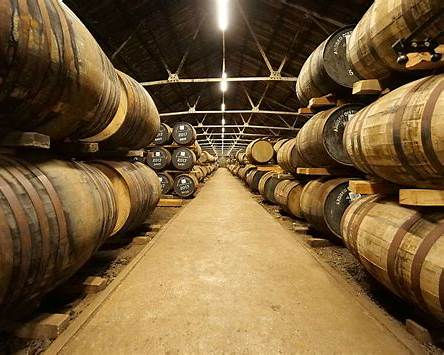
The whisky world has never been busier. New releases appear every week, labels are shouting for attention, and your social feeds look like a never-ending parade of single casks and “exclusives”. Somewhere in the middle of that circus, two very different kinds of whisky bottle are quietly being treated as if they’re doing the same job: distillery bottlings and independent bottlers. They’re not - and if you enjoy whisky, it helps to know who’s actually talking to you from the glass.
Distillery bottlings are the official releases with the distillery’s own name front and centre. Independent bottlings are whiskies from those same distilleries, but selected and bottled by a separate company under its own label. Think of OBs as the studio album and indies as the remixes: both can be brilliant, both can be dreadful, and neither is automatically cooler just because fewer people have heard of it.
What’s Actually in Front of You?
Pick up a distillery bottling and you’re holding how that producer wants to introduce itself to the world. The 10, 12 or 18 year old, the sherry cask edition, the peaty sibling – these are meant to say, “This is us,” in a way that’s recognisable from Newcastle to New York. They have to work in cocktails, on back bars, in airport shops and under the unforgiving lighting of supermarket aisles.
Independent bottlers, by contrast, live much closer to the cask. They buy or control individual casks or small batches and decide when to bottle, at what strength, whether to give the whisky a finishing holiday in something exotic, and how wild to go with the label art. The name on the front is theirs, even when the distillery is mentioned in smaller print. At their best, they show you a familiar spirit in an unfamiliar outfit. At their worst, it’s fancy dress over very average whisky.
Once you see it that way, the question stops being “Which team are you on?” and becomes “What was this bottle trying to be - and did it actually pull it off?”
Why Independent Bottlers Are Everywhere
In the last few years, independent bottlers have multiplied like opinions in the vacuum a Facebook group. Whisky fans have fallen hard for one-off, numbered bottles. Casks are treated less like ingredients and more like share certificates. Shops and bars want something the place down the road doesn’t have. Put that together and you have fertile ground for more small bottlers.
There are obvious upsides. You can discover spirit from distilleries that rarely shout under their own names. You can find odd ages and unusual casks. You often get more detail on the label - cask number, fill date, outturn - and higher bottling strengths. For the curious drinker, that can be catnip.
But as with cats and catnip, the fun can get out of hand. More labels mean more uneven quality. Prices can be higher than you might expect from something that feels “small and honest”. Not every single cask is special, no matter how lovingly the story is told. And sometimes you realise the most limited thing about a bottle is the amount of flavour inside it.
If you’ve ever tried a beautifully packaged, limited release and found yourself quietly thinking, “Is that it?”, you’ve met the downside of the indie boom.

How We See Value in the UK
In the UK, this all lands on top of a sensitive spot: price. Many of us remember when certain 10- and 12-year-olds were comfortably affordable, and we’ve watched those prices climb. Some age statements have crept off the shelves or reappeared in fancier clothes with fancier RRPs. Add duty rises and it’s easy to feel that distillery bottlings are quietly picking your pocket.
Independent bottlings, meanwhile, often arrive with built-in justification for their prices: cask strength, “one of 276 bottles”, “hand-selected” from a magical warehouse that, judging by some Instagram feeds, is permanently bathed in golden light. It sounds like better value. Sometimes it is. Sometimes it’s just better copywriting.
The slightly awkward truth is that a good official 10- or 12-year-old still does a huge amount of work for the money. It’s designed to taste like that distilleries style, reliably. It’s meant to be poured and enjoyed, not vacuum-sealed and flipped. It doesn’t need a dragon on the label to get your attention.
And remember: we’re in an unusually noisy corner of the market. The UK has a dense network of specialist retailers and web shops, all vying to offer you something “exclusive”. We see more independents than many drinkers abroad ever will. In plenty of countries, if you say “whisky”, people think of distillery bottlings first, second and third. Indies are seasoning, not the main course.
What You Miss If You Ignore Distillery Bottlings
Deciding that you’re “done” with OBs might feel like a statement of connoisseurship. In practice, it mostly means you’re choosing to learn less from your whisky.
You lose your reference points. The official range is where a distillery tells you what it thinks it’s about. If you’ve only ever met a distillery through three noisy, wine-driven single casks, your idea of its character will be… let’s say “interpretive”. It’s like judging a band entirely on remixes and then complaining the album sounds too coherent.
You overlook a big slice of the craft. We love to talk about “that one incredible cask”, but the ability to turn out a good, recognisable whisky year after year is its own kind of magic trick. It takes wood management, blending skill and discipline. If we’re going to romanticise warehouses - and let’s be honest, we are - we should extend some of that romance to the people quietly keeping core ranges on track.
You miss where innovation usually starts. Most of the big experiments - changes in barley, fermentation tweaks, new cask policies - happen at distillery level.
Independent bottlers can put an interesting frame around those ideas, but the heavy lifting is done upstream. Ignore OBs and you only ever see the ripple, not the stone dropped in the pond.
And you risk paying more for less whisky you actually drink. Chasing limited bottlings is exciting, until you realise your shelf looks like a museum of unopened glass. A well-chosen distillery bottling you happily pour for friends is much better value, emotionally and financially, than an indie trophy you’re secretly scared to open.
Distilleries Need to Meet Drinkers Halfway
Of course, some of this is on the distilleries. If a chunk of the enthusiast crowd feels closer to independent bottlers, it’s not just because of outturn numbers and ABVs; it’s because of how people talk to them.
Many whisky fans will tell you they get more honest-sounding information from a small bottler’s email or Instagram caption than from a global brand’s entire campaign. Indies will explain why they picked a cask, say what they like about it, admit that it’s a bit weird and won’t be for everyone. It feels like a conversation, not a press release.
Meanwhile, too many official channels still sound like everyone else’s brochure. Safe adjectives. Carefully approved phrases. Not a lot of real detail on what’s changed and why. It’s hard to fall in love with something that sounds like it was written by a committee three time zones away.
The irony is that distilleries have the best raw material for real stories: the people who make the whisky, the experiments that worked (and the ones that didn’t), the history, the long view of how spirit changes over decades. When they choose to show a bit more of that - in plain language, without pretending every tweak is a revolution - drinkers respond very quickly.
So yes, some of the work of making distillery bottlings feel exciting again belongs with the distilleries. Not by trying to out-“limited” the independents, but by being more open, more specific and a bit less scared of sounding human.

Stop Picking Sides. Ask Better Questions.
This isn’t about declaring a winner between independent bottlers and distillery bottlings. If either disappeared tomorrow, whisky would be a much duller place.
A more useful habit is to ask better questions when you’re choosing what to buy or pour:
What is this bottle actually trying to be? Does the whisky in the glass live up to that idea? Is the price sensible for what I’m getting, in this context, right now? How does this compare to what the distillery itself offers?
Sometimes your honest answer will be, “This indie does something I’ll never see from the official range – I want that.” Other times it will be, “The distillery’s own 12-year-old is better made, more balanced, and cheaper. I’ll happily drink that instead.”
What it shouldn’t be is, “I don’t buy OBs, full stop.” That kind of rule doesn’t make you a more serious whisky drinker. It just means you’re ignoring half the conversation.
Sign up to my mailing list or keep an eye on my socials for incoming posts. Browse up and coming events
Comments